


A clutter-free guide to minimalist style for your office or shop


Whether you run a shop with plenty of products to display, an artisan corner café or an office where clean lines create an open environment for productivity, you’ll need to know how to master the magic of minimalism.
At its core, minimalist interior design focuses on simplicity, clean lines and creating a clutter-free environment. It’s that principle of “less is more”, where every element in the room should serve a purpose.
Sounds ideal, right? But as we know, in our businesses (and lives), mess and clutter can accumulate quickly, overwhelming you so much you just let it be.
Well, you don’t have to. We asked IKEA for Business Interior Design Specialist Rachel McGrotty to take us through some of her best tips for mastering minimalist design in business.
When it comes nailing the core principles of minimalist design, McGrotty notes form should always follow function.
“Start by listing all functions the space needs to fulfil, and base your design around that,” McGrotty tells Kochie’s Business Builders.
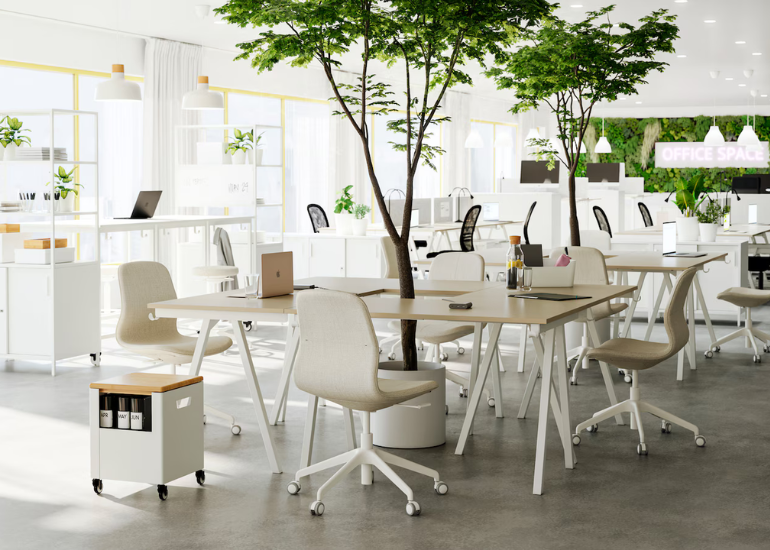
She recommends keeping colours simple and furniture uniform, so the space looks uncluttered.
“Minimise decoration, with the exception of plants, and choose good functional lighting and ergonomic furniture,” she elaborates.
Balancing minimalism with functionality and customer engagement is likewise an exercise in designing the space around the functions it needs to perform.
McGrotty says decorative points must be kept to a Kondo-esque minimum, so the space avoids becoming too busy.
Keeping everything tucked neatly out of sight is simply not an option for all businesses, for example, beauty and wellbeing services who bring in additional revenue from add-on product sales.
However, this does not mean embracing the minimalist aesthetic is out of reach – McGrotty notes that you can still achieve a minimalist look without sacrificing product visibility and appeal.
Taking notes from the “a place for everything and everything in its place” school of thought, she recommends glass display cabinets for a clean look which keep products contained.
“Group them by brand, colour or function so they look organised and keep them to one area rather than spread all over the premise,” McGrotty suggests.
Having departments or areas zoned by colour for different product groups can also help, as can prioritising the most important items and amplify them, so not every product is ‘shouting’ for potential buyers’ eyes.
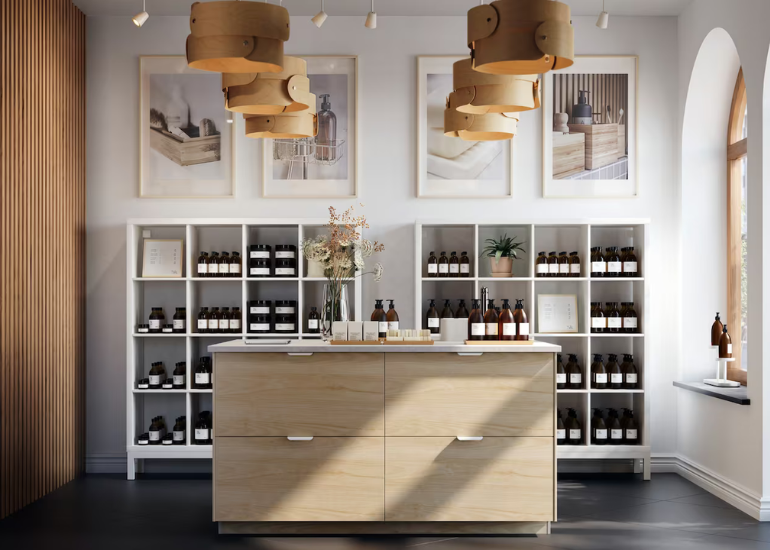
While the term minimalism often brings up a mental image of a cold, stark and clinical space – think white walls and sparse furniture – this need not be the case.
Following the minimalist interior design mantra instead calls for using the simplest and fewest elements for maximum effect.
For cafés looking to adopt a minimalist style while still creating a warm and inviting atmosphere for customers, colour is key.
“Use a warm colour palette and look outside design elements to create warmth – for example, carefully chosen music and plants, comfortable chairs, luxe, sleek throws in a sympathetic colour scheme, and a good floor plan flow so people waiting for takeaway aren’t in the way of waiters and seated customers,” McGrotty advises.
McGrotty also recommends using covered storage behind the counters and keeping the menu communication simple rather than cluttering the space (and customers’ minds) with signs everywhere.
Minimalist design is understandably popular in office spaces looking to boost productivity through clean lines and an uncluttered environment.
“Start by creating a well-designed floor plan with a good flow and ergonomic design, and storage space for everything,” says McGrotty.
She recommends using room dividers, partitions and privacy screens, and greenery for wellbeing.
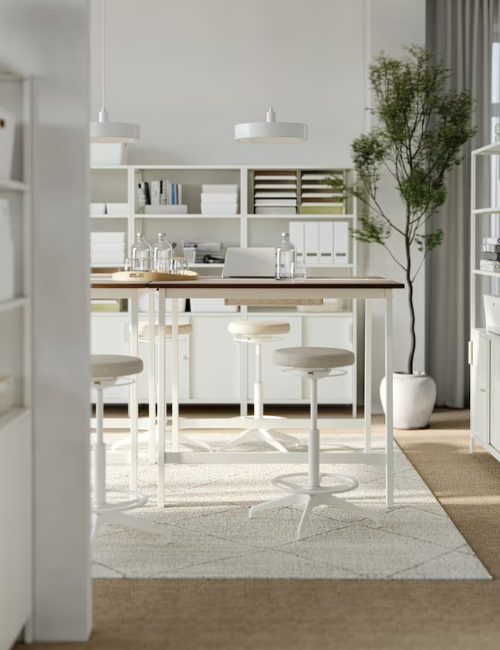
Keep the zen, uncluttered look by choosing textures and colours that blend with the walls, and choosing plants with straight, architectural lines.
Neutral colour palettes help create a calming and open atmosphere, as does making the most of any natural light.
Choosing materials like wood, glass, and metal can add texture and contrast without overwhelming the space. McGrotty adds that a mix of task lighting (like lamps) and general lighting can help keep the space feeling warm.
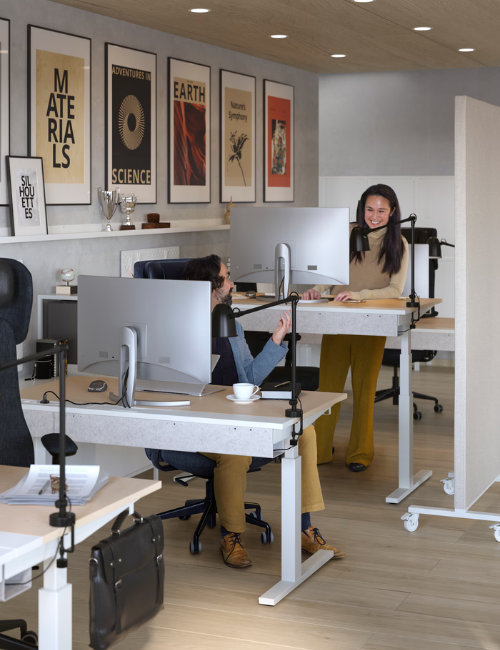
Finally, make sure you’re choosing ergonomic furniture for body wellbeing, like sit/stand desks and adjustable chairs.
Desk organisers, drawer units and cable management tools are also easy and effective ways to contain clutter without compromising productivity.
Ultimately, bringing minimalism into any space comes back to the core principle – creating a harmonious environment where the focus is on the essentials, and quality over quantity.

Join the IKEA Business Network, a free loyalty program giving you instant access to benefits, discounts and perks to create a better everyday life at work. Benefits include a free one-hour consultation with an interior designer, plus discounted interior design solutions. Join today.
This article is brought to you by Kochie’s Business Builders in partnership with IKEA for Business.
Feature image: IKEA

Melanie Hearse is a West Australian-based freelance writer, specialising in real estate, personal finance, health, lifestyle and small business writing. Her work has appeared on four continents, and she regularly contributes to news and lifestyle outlets, magazines and speciality websites. When she’s not tapping on her keyboard, she can be found reading a book or talking the ear off a stranger, usually with one of her dogs in tow.



Comments