


How to break into Southeast Asia: What Aspen Medical got right (and wrong)


Wondering how an Aussie company can enter the Southeast Asia market? Andrew Rochford, president director and CEO of healthcare solutions firm Aspen Medical – Indonesia, shares practical insights from their recent expansion into Indonesia, including what worked, what they overlooked, and how Australian Investment and Trade Commission (Austrade) helped.
Aspen Medical began in 2003 with a clear mission: tackling healthcare challenges in tough environments.
Its impressive track record includes managing an ebola treatment centre in Sierra Leone in just 40 days, supporting life-saving field hospitals in Iraq alongside the World Health Organization, and upgrading Fijian hospitals to enable critical local heart surgeries.
And this is just a glimpse of the company’s work, which ranges from building hospitals to supplying frontline or clinical staff and more, for private and government organisations.
Working mostly in developing countries, Southeast Asia had always been on Aspen Medical’s radar. Founder Glenn Keys AO brought well-known ER doctor and media personality Dr Andrew Rochford on as CEO in Indonesia three years ago after Andrew’s success running his own healthcare company in the country for 12 years.
Here’s what Andrew wants other businesses to know about venturing into this exciting region:
“We chose Indonesia because of the economic opportunities,” Andrew tells Business Builders. “It’s got one of the fastest-growing middle classes, a population of more than 280 million, and there’s a strong government focus on improving the universal healthcare system.
“Recent presidents are also now much more willing to welcome foreign investment.”
Healthcare is one of many opportunity areas for Australian businesses across Southeast Asia. As the population and middle class grows across most countries, so does the demand for premium food and beverages, digital products, education and training, financial services and clean energy.
Economically, the region is set to become the world’s fourth-largest economy by 2040, its consumer market is projected to be 10 times larger than Australia, and its GDP forecast is set to grow nearly 383 per cent to US$1386 trillion. With bilateral and regional free trade agreements between Australia and Southeast Asia, Australian businesses are well poised to make the most of the region’s growth.
Government relationships have been crucial to Aspen Medical, especially the Australian Trade and Investment Commission, Austrade, a federal agency that promotes international trade and facilitates global connections.
“They’ve been excellent in helping us get brand awareness in a challenging market and to connect us with key people,” says Andrew.
Aspen Medical’s first investment into Indonesia is a flagship hospital – the first green accredited hospital in Indonesia’s history. Now, they have plans to build 23 hospitals and 650 primary care clinics across West Java, with key connections made through Austrade.
“We’re operating at a level where we need to speak with health ministers and Austrade has helped us set up meetings, which is hugely valuable,” he adds.
Building strong relationships with locals is also essential (see step 4 for more on this).
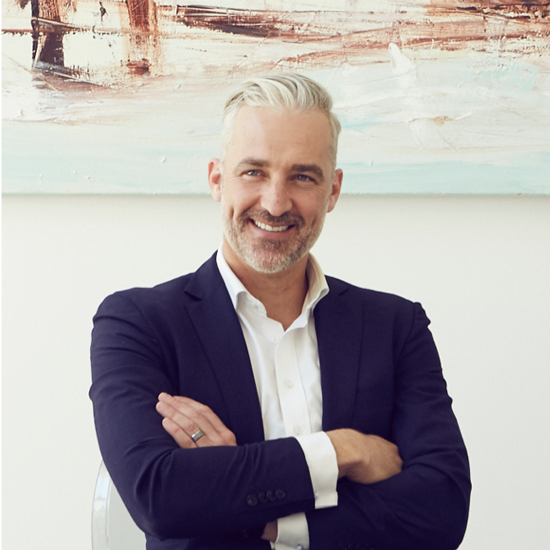
It’s important to get clear on where you fit into a new region. “It’s one thing to say we’re really good at what we do, and we’re a strong international brand, but where’s our spot?” says Andrew. “We found there were great local players, including influential hospital and healthcare groups, but there’s a gap for international-standard, high-quality, experienced healthcare.”
Then you need to figure out the best way to fill that gap. For Aspen Medical, it was a joint venture to build a hospital with a local state-owned enterprise as a minority shareholder in the infrastructure project.
“Legally we couldn’t be 100 per cent owners of a hospital and we knew red tape was always going to be a challenge, so we felt that getting a local partner would help,” Andrew says.
Watch video: Aspen Medical founder Glenn Keys on their Southeast Asia journey
Post continues after video.
Navigating the bureaucracy in Indonesia, especially with licensing and permits, was a significant challenge for Aspen Medical.
This is where strong local relationships made all the difference. Andrew and Aspen Medical chairman and founder Glenn Keys had the chance to discuss these issues with the former Indonesian president, Joko Widodo, at a roundtable in Sydney.
“After our discussion, we were invited to meet the Indonesian finance minister, who offered to help tackle these hurdles,” Andrew says.
Embracing local knowledge and cultural differences was also crucial for Aspen Medical’s success.
“As Australians we’re naturally confident and say it how it is, but Indonesians are the complete opposite,” explains Andrew. “So you find yourself in these scenarios where consultants are just politely sitting there nodding but don’t take action.
“You need to get comfortable with the fact that there are different ways to do things, otherwise you’ll go nowhere with your business – they’ll move on without you.”
One of the main things Andrew and his team underestimated is how willing the locals are as a country to support foreign investors.
“They’re inherently welcoming and if you accept and respect that, there’s so much opportunity,” says Andrew.
This is one of the areas Andrew wishes the company had done things differently. “We would have leaned even further into getting the best locals right at the beginning,” he admits. “We underestimated just how much value there is. We’re seeing such great value now by having some of these exceptionally experienced and knowledgeable teams.”
Starting out in Southeast Asia might not pay off instantly. Aspen Medical’s initial hospital is capital heavy – yet there’s value in that, according to Andrew.
“You’re proving you’re willing to invest in the market and you’re here to stay,” he says. “Not being seen as a fly-in, fly-out foreigner has been hugely important and I don’t think we’ll fully understand that until some years down the track, because it’s a hard place to get your foothold as a foreigner.”
The company also has in place some other contracts with key players which it expects to see ramp up over the next two years.
Launching your Aussie business in Southeast Asia might seem daunting, but the timing couldn’t be better. Australia’s Southeast Asia Economic Strategy to 2040 is actively encouraging greater two-way trade and investment between Australia and Southeast Asia, making it the perfect time for businesses to take that step with support both locally and on the ground.
“We’ve built up a significant amount of goodwill in the region,” says Andrew. “Australia is a strong brand in Southeast Asia and there’s a level of commitment, support and motivation for foreign investors that hasn’t been there in the past, so now is a good time to make the move.”
Find out more on how to expand your business into Southeast Asia by visiting the Austrade website.
This article is brought to you by Business Builders in partnership with Austrade.
Feature image: Dr Andrew Rochford, CEO of Aspen Medical – Indonesia; Ridwan Kamil, Governor of West Java; Airlangga Hartarto, Indonesia’s Coordinating Minister for Economic Affairs; Glenn Keys, founder of Aspen Medical; and Budi Gunadi Sadikin, Indonesia’s Minister for Health.


Comments