


The scammers playbook is open to Tax Time Scams


Awareness is the key to fighting tax time-related scams. Scammers have honed their craft to create extremely sophisticated phishing (malicious) emails, smishing texts (SMS phishing) and vishing (voice phishing) that look and sound like the real thing. Jacqueline Jayne, Security Awareness Advocate at KnowBe4 explains how you can avoid them.
There are literally 100s of previously successful tax time phishing scams from the scammer’s playbook. We see the same scams year on year and millions of dollars being stolen from hard-working Australians.
According to the Australian Competition and Consumer Commission’s latest Targeting Scams reportAustralians lost $851m to scams in 2020. The report went on to highlight that:
“In 2020, there were over 24,000 reports about government impersonation scams made to the ACCC, with losses of $1.9 million. Scammers often impersonate government agencies to seek a financial benefit or personally identifiable information from people. The most common government agencies impersonated in 2020 were the Australian Taxation Office, the Department of Home Affairs and Services Australia.”
Below are some examples we all need to be aware of, advice for employers and employees, advice for tax professionals and some useful links.
The ATO are receiving reports of a new email and SMS scam that asks people to update their myGov or myGovID details. Scammers pretend to be from the ‘myGov customer care team’ and send emails telling people they need to verify their identity by clicking on a link. If you open the link, you will be taken to a fake myGov website where you are asked to sign in with your myGov details.
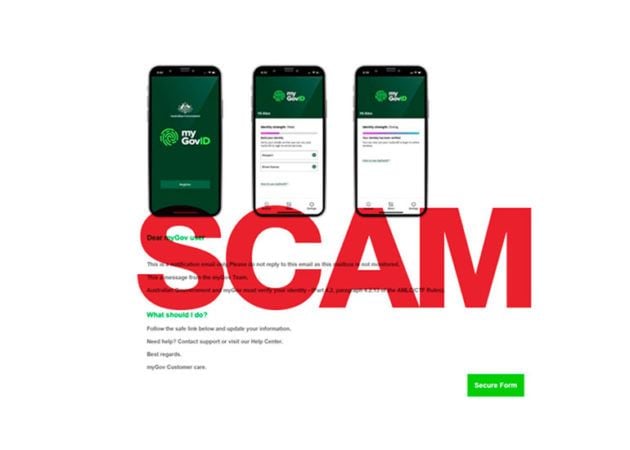
Example above is from the ATO website
myGov will never send you a link in an email or SMS. They will only send you links within your myGov inbox within the myGov app.
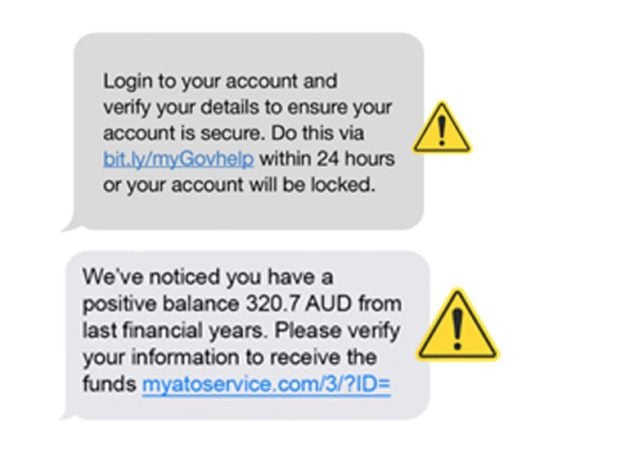
This is a fake SMS. If you receive an SMS with a link to click or a number to call from myGov or the ATO don’t click on it. Instead, visit their official websites or call them directly.
For the last few years at tax time, the ATO receives reports of calls where you hear an automated voice message claiming that your TFN (tax file number) has been suspended and that there is a legal case against your name. The scammers then ask you to press ‘1’ or you will be referred to the court and arrested. This is a scam. If you do press ‘1’ you will be put through to a real-life scammer who will tell you that your TFN has been suspended due to money laundering or fraudulent activity. Then, just to leverage the fear factor, you are asked to provide the last four digits of your TFN, address, date of birth, name of your bank account and the approximate amount of money in the account(s). If you are lucky, the scammer may transfer you to the fake police. They will tell you that a case has indeed been filed against you and you will be arrested if you don’t pay. If you receive this call hang up. The ATO will never send unsolicited pre-recorded messages to your phone or threaten you with immediate arrest.
This contact can come from a phone call or SMS where you are informed that you have a tax debt and that if you don’t pay it straight away you will be arrested. The scammers will demand payment via pre-paid gift cards or credit cards or even cryptocurrency (e.g., Bitcoin) and will be very persistent for you to pay them. If you receive this call hang up. The ATO will never call you about a tax debt. And it’s a big red flag if someone asks you to pay in this way.
Here are the official contact details for myGov and the ATO
https://www.ato.gov.au or you can call them on 1800 008 540
You can also use the official myGov or ATO app, both of which are available on iOS and Android
Report any suspicious activity at:
Remember if in doubt check Scamwatch
Want more? Get the latest coronavirus news and updates straight to your inbox! Follow Kochie’s Business Builders on Facebook, Twitter, Instagram, and LinkedIn.


Comments