


How Seabin is saving our oceans while helping businesses build purpose into their everyday


After crowdfunding the launch of their world-famous ocean clean-up device, Seabin, Pete Ceglinski and its inventor, Andrew Turton, have turned the business into a world-changing subscription model. Since its launch, Seabin has captured well over three million kilos of waste from our oceans and counting.
Pete joined editors Cec Busby and Adam Bub on the First Act podcast to share Seabin’s journey from cash-strapped invention to global eco-champion, saving our waterways and ecosystems from human waste such as microplastics and other toxic items.
“Andrew Turton is an amazing sailor and professional boat builder who had an idea about this thing called a Seabin,” says Pete. “And I was like, ‘Oh cool. What are you going to do with it?’ And he didn’t know. He had this great idea but didn’t know the next steps.
“That was a light bulb moment – I had done that in my first career as a product designer. The best idea in the world that isn’t executed isn’t worth anything,” he says.
And so, the idea to crowdfund was born.
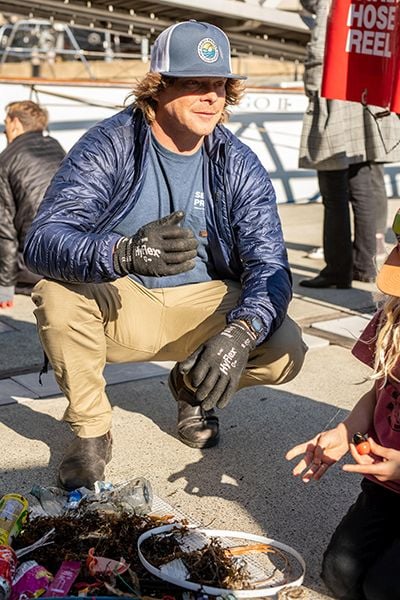
Pete Ceglinski, Seabin co-founder
Pete admits that momentum for Seabin’s crowdfund built slowly, and they even met with closed doors from fellow environmentally-focused businesses. However, a single video eventually took the campaign viral, and everyday citizens helped them over their $150k Euro (approximately $350k AUD) funding goal line.
“I’d heard that if you have a good idea, people will give you money to do it,” says Pete. “It was a bit harder because we didn’t have a product that everyone could have – but it was something everyone would benefit from. However, businesses were shutting us down and blocking me on Facebook. That was when I realised we were in a conflict of interest with other environmental not-for-profits and business models. It was a horrible moment for me, discovering how the not-for-profit and environmental world operated behind closed doors.”
Despite these initial challenges, you can’t keep a good idea down – and a simple video to demonstrate the Seabin’s worth finally resonated with audiences who jumped on the concept.
“After a while, we got a little bit of traction because nobody had seen a trash can in the water. You know, if you capture Bigfoot on camera finally, that shit’s gonna go viral,” he laughs. “We had something that no one’s ever seen before – a rubbish bin we put in the water – the most obvious thing in the world that no one had thought of. And it went nuts, with billions of views. From there, we started getting $2 and $3 donations – it all started to add up, and we made our target.”
Listen to Pete Ceglinski on the First Act podcast:
After much hard work and dedication, global success followed for Seabin, with cities from Sydney to Los Angeles and Philadelphia jumping on board to clean up and monitor microplastics in their waterways. However, Pete and Andrew realised that to make a significant global impact, they had to do more than simply sell a single product.
The next step on Seabin’s social responsibility journey meant getting the rest of the world involved – from individuals and small and big businesses to local environmental and sustainability groups. The outcome? A subscription model with data as the main selling point – data that subscribers can use to measure their investment’s ecological impact.
“Essentially, we’re a utility and data service now,” says Pete. “We count things – such as how many plastic straws or microplastics we collect. We’ve been working with the United Nations, the EPA and government agencies around Australia, and we’ve partnered with IBM – the biggest data partner in the world – to use artificial intelligence to get more efficient with our data.”
The subscription model allows individuals and businesses to sponsor a Seabin for a per annum fee – and the primary deliverable is data.
“We realised that there are companies that don’t have a business model where they can create impact with what they do, but they do have money and budgets and sustainability reports – they want to help make the world a better place.
“We’ve got this amazing business model where we’re providing information on how many things we counted and collected, and we put that into a report. They spent X amount of money, X amount of trash was collected, and X billions of litres of water were filtered. They put that into a sustainability or marketing campaign report, and that is how they elevate themselves and us as well. Our corporate partners are stoked.”
And while cities and big businesses are embracing the Seabin ethos, Pete says there are plenty of opportunities for the smallest companies to get involved and boost their social responsibility.
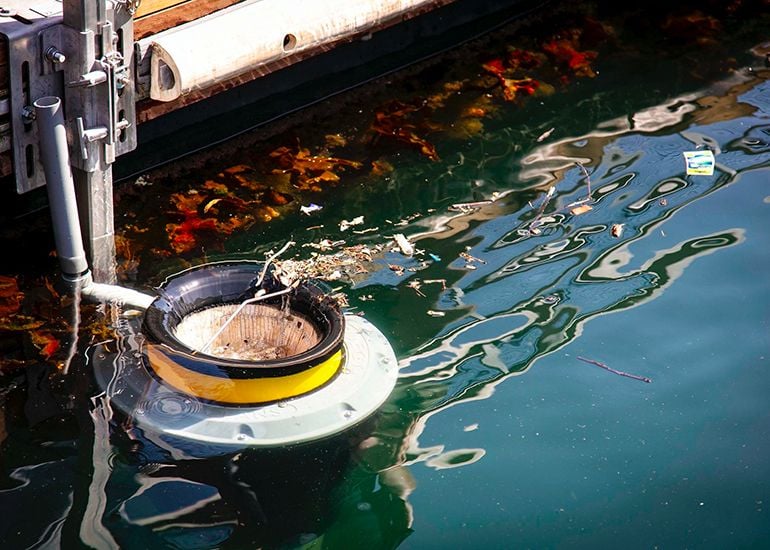
The Seabin in action
“Lots of people don’t have a hundred thousand dollars to invest, but they do have $250 or $500,” Pete acknowledges. “A lot of these regular people are also looking for businesses that have a purpose attached to their profit. So we’ve somehow found ourselves in this little gap that we’ve filled, where we can build purpose into other people’s lives.
“If your business doesn’t have a purpose, that’s not a problem,” says Pete. “You don’t have to have a product that saves the oceans; you don’t have to build that into your business model at the start. But if you want to succeed, you will have to build it in as you go because with a woke consumer culture, that’s the only way you’re going to succeed in business these days.
“I see a lot of anxiety and overthinking going into sustainability – everyone has to save the world. We don’t all have to; we still need to build houses, and we need plumbers. We need all that stuff, but there is a way you can build purpose into that. If you’re making money, you can build something into a margin – you can plant a tree and help save a rainforest or a koala.
“A lot of other people just like me want to build purpose into their life,” says Pete. “They want to be part of something bigger, part of a solution. So we created this business model where we activate communities and can deliver purpose if you want it. We have volunteer programs and citizen science programs; we do beach clean-ups. We’ve been conquering these cities using the communities that all want the same thing – cleaner oceans and less trash on the beach.”
“This is the decade of ocean science, but we know more about the surface of Mars than we do the bottom of our oceans,” Pete reveals. “Essentially, what we are doing by counting microplastics is we can quantify it transparently and accurately. We found a data gap – because no one has this information – and where there’s a data gap, there’s opportunity.
“No one had put the rubbish bin in the water – so now we’re using the data from the Seabin to influence positive legislation and policy-making for sustainable cities and communities around the world.”
Pete shared a fantastic swag of insider advice about crowdfunding, social responsibility and finding your business’ purpose in this episode of First Act – listen to the entire ep now.
Join us each Tuesday for a brand new episode of First Act, because every story has a beginning.


Suze English is a writer, content producer and social media manager with 15 years of experience bringing editorial and website content and social media to life for Australian businesses.


Comments