


Know your worth: Imposter syndrome belongs in the bin!


As businesses owners, we place ourselves in a position of authority which can sometimes feel uncomfortable, and imposter syndrome can quickly set in. But PR expert Annette Densham says it’s time to embrace our talents and expertise and tell imposter syndrome where to go.
There are so many talented and incredible people who, despite all the hurdles and challenges the world throws, continue to show up, serve, deliver and be the best they can be.
Yet, when you look back over your successes and achievements for the year, do you still feel that someone will pop out from behind a bush and shout, “What do you know? Who are you to do what you do?” Do these feelings leave you feeling like your web of lies will untangle, revealing you as the ‘imposter’ you are? You are not alone. The highest achievers feel like that every day.
I know. I am a recovering imposter. For most of my life, I felt like someone was going to call me out; that all of my accomplishments were meaningless.
It all started when I was seven. My self-doubt and fear were borne from one sentence spoken by the person I knew loved me most in the world.
I’ll take you back. It was a hot summer afternoon in 1977 as my sister and I walked out of our primary school, big, black storm clouds following us home. But we were not racing to get home because of the storm. Clutched in my sweaty little hand was my first award, the Top Dog Award for Achievement. My award was for a book report.
Banging through the screen door, I was already calling out to my mum. Bursting into the kitchen, I found her on her hands and knees, scrubbing the floor, hands raw from the hot water.
“Mummy, Mummy, look what I got!”
Her tired eyes looked up from the floor, “Watch where you are walking, I just cleaned there.”
I persisted, flapping the award in her face. “Look what I won, Mummy.”
She sighed … “That’s nice, but no one likes a show off.”
Bam. Shut down.
I didn’t know Mum was exhausted, stressed, and worried about where our next meal was coming from or how to pay the electricity bill. All I knew was that I had done something wrong. I slunk to my room and cried.
From that moment, I stepped back into the shadows and never put my hand up for an award or anything that meant I stood out until I was 45 years old. Without realising it, my mum’s words changed the path of my life. Her words stole from me the joy of the moment and triggered, for the first time in my young life, doubt, and the feeling that achieving and excelling were bad.
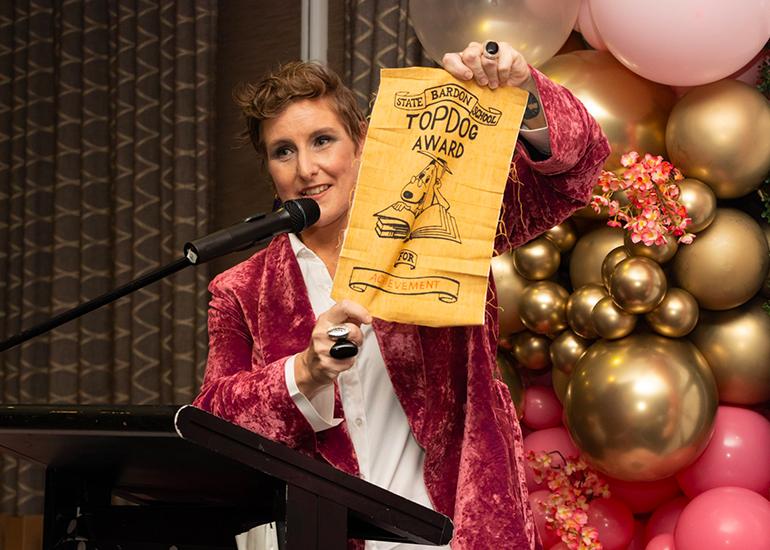
I grew up being told not just from my mum, but the world, that little children should be seen and not heard, that people who achieve are show-offs who think they are better than everyone else. We believe what we are told and sadly, those notions still pervade our world today.
My mum’s response was due to social conditioning – that squishing of the feminine power starts early for many women. Almost forty years on, our society talks about empowering women to be all they can be, but the conditioning is still there and has given rise to a greater evil – imposter syndrome.
While there are unicorns who defy these social norms, most women spend a lot of time in self-doubt, self-loathing, and denial of their abilities … even though they’ve invested years in their education, skills and lives.
As women, we are still being told to:
If you doubt this, go on social media and look at the negative comments from people who bag awards or rip into someone achieving. Thanks to another grand Australian tradition – tall poppy syndrome – combined with imposter syndrome, we have a population of incredible women who think they are losers.
Imposter syndrome is an insidious curse. It robs the world of people’s amazing gifts and talents. Every day, women in business believe they are not good enough, have not done enough, are not worthy, that everyone else is better than them.
This is despite decades of developing and investing in their skills and careers, bringing up families, juggling the mental load and household chores (still disproportionately carried by women), changing the world with their amazing inventions, products and services, showing up every day with solutions to problems.
They still doubt themselves.
And while we can blame society for perpetuating imposter syndrome, we know enough about the brain now, and have enough personal development education out there, to know that imposter syndrome starts and ends with us.
We are the ones speaking negative things in our heads, stopping us from having a go – we make shit up in our heads and believe our own bullshit. We put the roadblocks up to our success – we are the ones who decide not to enter awards or ask for a pay rise.
While we need humility and modesty to prevent us from being a self-absorbed narcissist, there is a line when self-doubt becomes a hindrance, stopping you from moving forward.
View this post on Instagram
The reason we do this is embedded in perfection and perception. Perfectionists think that if they are not perfect, people will think less of them.
But perfection (hang on to your seat, perfectionists) … there is no such a thing.
One of the world’s smartest men, Stephen Hawking, said: “The universe doesn’t allow perfection. One of the basic rules of the universe is that nothing is perfect. Perfection simply doesn’t exist … without imperfection, neither you nor I would exist.”
Striving for perfection is just damaging your chances of grabbing opportunities and letting people see the deeper you. Seeking perfection puts you in a state of ‘less’ or scarcity. You will never feel good about yourself; you will never see your wins as good enough. You will never move out of your comfort zone and will miss many opportunities to collaborate and connect. That is a lose/lose for all.
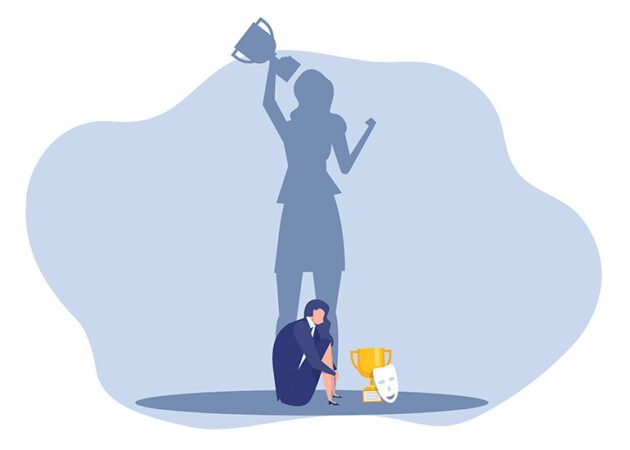
The thing missing from your business is your belief that you are good enough. In this influencer- and image-driven world, it is easy to not feel like a winner. But the key to winning starts inside your head – if you don’t believe in yourself, who will?
Winning is not about trophies and glitzy events. Winning is showing up even when you do not want to, because you know you have something that will make a difference in people’s lives. By focusing on what you can do for others, it takes imposter syndrome out of the picture. The focus isn’t on what you are or aren’t, it is on what you bring to the table and how you can help others. If you have started a business, a venture, created a product or service that solves a problem, and people are buying it, you are a winner.
When you doubt your influence and impact on the world, remember this: The compliment you paid someone just made them smile and believe a little more in themselves. The book you recommended to your friend, she read it and loved it, and is implementing the suggestions to change her life. The joke you told over lunch is being told to that person’s family tonight, making them smile.
Never believe you do not have influence; you influence people every day with your words, actions and emotions. Don’t spend decades second-guessing and trying to be something others want you to be. As long as you go through life doing the best you can, without deliberately hurting others and taking ownership of your actions, there are people who will love you for it.
There are lessons and beauty in our mistakes, imperfections and flaws. Flaws do not make you less; they do not mean you can’t excel and achieve. Flaws and mistakes give you opportunities to grow and learn. By letting go of perfection and embracing our mistakes, imposter syndrome loses its grip.
Stop trying to be everyone else. Be the person you should be, warts and all. People will love or hate you based on their own life experiences and perceptions, so why try to please everyone? You never will.
Doubt is a normal human condition but you can overcome it. Tell imposter syndrome to get lost. It has no place in your life; you have big things to do! Just be you.
This article was first published on Flying Solo, read the original here.
Want more? Get our newsletter delivered straight to your inbox! Follow Kochie’s Business Builders on Facebook, Twitter, Instagram, and LinkedIn.

Annette Densham loves a good yarn. She was born to be a storyteller. At 15, she started as a journalist at a suburban newspaper. From that moment, she was hooked. Over the past 40 years, she’s written stories about forklifts, tax, theatre lights, sport, senior issues, health and small business. Her favourite stories are about people. A weaver of words, Annette loves helping small businesses use the power of their stories to drop beautiful breadcrumbs to connect them to their audience, raising their profile using content and business awards. As the winner of 2024 Telstra Best of Business Award Queensland – Accelerating Women, Annette specialises in working with women in business to tell their stories.


Comments